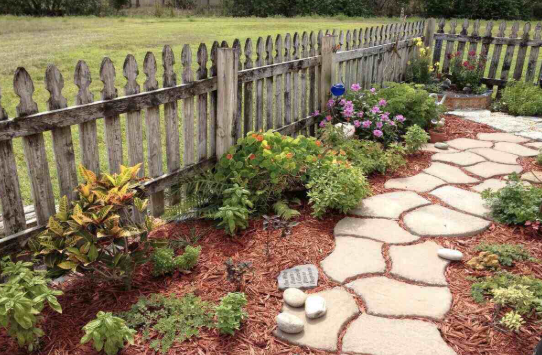
Mud on the doormat. Mud on the hallway runner, tracked in by a dog who has no opinion about any of it. All of it comes from one stretch of ground at a 1970s Vancouver rental, the sixty foot side yard run between the gate and the back door, and the material homeowners circle back to after gravel and straw both fail is walk-on bark, which Bark Dust Vancouver WA yards sell in fine, medium and large chunk grades. Most buyers choose by color. That is backwards. Texture is what decides whether a bark path drains, stays where you put it and survives a wet November, and the color decides nothing except how the yard photographs in July.
Bark Grades Behave Differently Under Daily Foot Traffic
Fine bark looks good in a planting bed and behaves badly on a path. The particles are small enough to knit together, so after a few weeks of boots and paws they pack into a skin that water runs across instead of through. Water sits on top. You are back to mud, with an extra step in between. Job after job the same thing turns up on these side yards: two inches of fine grade laid last spring, packed hard as a dirt trail, slick in the six feet where the downspout empties.
Medium grade is the middle answer and the one most walked paths should get, because the pieces stay big enough to keep air and water moving while staying small enough to lie flat under a shoe. Large chunk bark is the opposite problem and the opposite virtue. It drains fast and lasts a good deal longer, but the pieces roll a little underfoot and a chunk path never looks as tidy in place as it did in the yard bin. Colored blends are dyed material, and the dye sits on the outside of whatever grade is underneath, so ask what the base actually is before you buy the color.
Bark and Mulch Grades for Walked Paths (general guide, illustrative scenario)
| Material Type | Best Use on Walked Path | Color/Texture Consideration |
| Fine Bark | Light-traffic aesthetic paths | Finer appearance; compacts quickly |
| Medium Bark | Mixed-use pathways | Versatile texture; 2-year lifespan |
| Coarse/Nugget Bark | High-traffic areas | Textured appearance; 3+ year lifespan |
| Gravel/Stone | Frequent-traffic paths | Excellent drainage; no decomposition |
Match The Grade To Traffic, Slope And Pets
Start with drainage, because grade only matters once the water has somewhere to go. If the run is still soggy at noon on a dry day, go coarse and go deep, four inches of large chunk across the whole sixty feet. If it drains by mid morning, medium at three inches will carry a season and a half. Depth is where budgets get cut and paths get ruined, and two inches of anything under a dog is a surface the first hard rain will take apart. For a three foot wide run, four inches deep means ordering somewhere near two and a quarter cubic yards, so measure the width before you call, not after.
Slope changes the answer again. On a side yard that falls toward the street, large chunk migrates downhill in a heavy rain and piles against the gate, which is why a header board or a length of bender board along the low edge earns its cost in the first winter. Dogs change it a third time. A dog that digs will throw fine bark everywhere and carry the dust indoors in its coat, so on a run that a shepherd or a lab uses ten times a day, medium is the floor and coarse is the safer buy.
See also: Why More People Are Swapping Gym Sessions for Time on Horseback
Does Bark Rot If It Stays Wet All Winter?
It breaks down, which is not the same thing as failing. Bark on a shaded, walked path in the Pacific Northwest loses volume every wet season and needs a top-up, usually an inch of fresh material each year on the stretch that gets the most feet. The pieces that go soft first are always the small ones, which is another argument against fine grade on a path you use daily.
Do I Need Landscape Fabric Or Edging Under A Bark Path?
Edging, yes, on anything with a slope or a hard boundary like a fence line. Fabric is the argument I have with homeowners most often, and my honest position is that it helps for the first two years and becomes a nuisance after that, because bark decomposes into a soil layer on top of the fabric and weeds root in that layer anyway. If you are laying over bare mud rather than lawn, skip the fabric and add the inch of depth it would have cost you.
How Deep Should Bark Go On A Dog Path?
Four inches on the walked line, three inches on the parts nobody cuts across. Deep bark works because the top layer stays loose while the compressed material underneath holds the shape of the path, and you lose that entirely below about three inches. Homeowners who spread a thin coat over a wider area are the ones calling back in February.
Buy For The Path You Actually Walk
Compare honestly before ordering. Pine straw comes up in every cheap-mulch conversation, and a May 2026 mulch roundup from Bob Vila reported that it covers up to 80 square feet per bale, called it the most cost-effective option next to premium materials like wood chips and bark nuggets, and noted that it decomposes slowly while adding organic matter to the soil. In a planting bed that math is hard to argue with. On a walked dog run it is the wrong tool, because straw slides under a shoe and mats flat inside a month. Straw on a walked path is a two week friendship.
Say the materials budget is $400 for the whole yard. Spend it on depth down the sixty feet you actually walk rather than on a colored blend spread thin everywhere the dog never goes. Call a Bark Dust Vancouver WA supplier, describe the run by length and width, tell them how long it stays wet after rain, and ask for walk-on grade by name instead of by color. Texture carries the traffic, and the color is only the part you look at.
