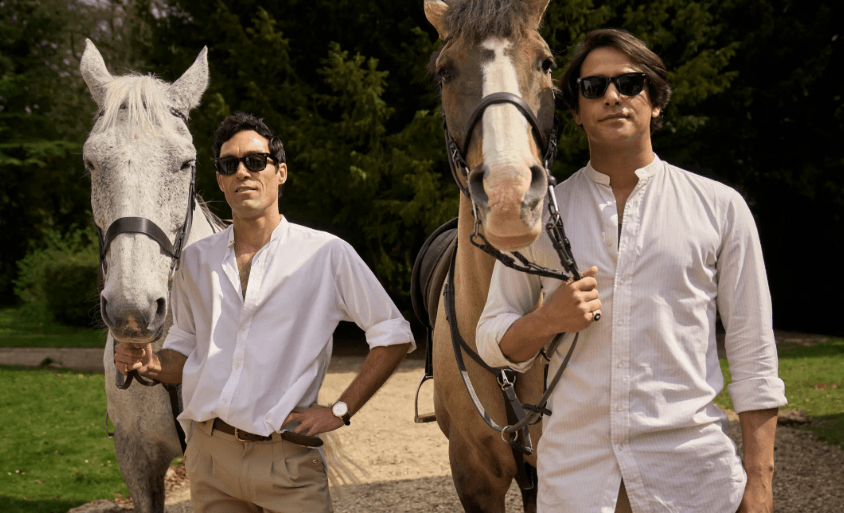
There’s a version of the fitness conversation that almost nobody is having, which is that some of the most effective movement people do isn’t in a gym. It doesn’t involve a structured program or a performance metric. It happens outdoors, often slowly, and produces physical and mental results that treadmill sessions and weightlifting cycles don’t replicate — not because those things don’t work, but because they don’t work on the same systems.
Horseback riding is the clearest example of this category. It’s not marketed as fitness. Most people who do it don’t think of it as fitness. But the physical demand of maintaining balance and position on a moving horse for two or three hours works the core, hip flexors, adductors, and stabilizer muscles of the lower body in a way that’s difficult to replicate through deliberate exercise. And the mental engagement required — reading the animal, responding to the terrain, managing your own posture and energy — produces a cognitive load that switches off the rumination cycle more effectively than most structured relaxation practices.
What Your Body Is Actually Doing on a Horse
The common misconception about riding is that the horse does the work. In anything beyond a sitting walk, this is wrong. Maintaining correct position at a trot requires continuous isometric engagement of the core and lower body — the rider is constantly making small adjustments to stay balanced over a center of gravity that’s moving in three dimensions at once. After an hour of this, the muscles that have been working make themselves known in ways that are distinct from weight training: deeper, more stabilizer-focused, located in places most gym programs neglect entirely.
The hip flexors and inner thighs take the most obvious load. The lower back and obliques work continuously to maintain an upright, following seat. The shoulders and arms, working to maintain a soft contact with the reins without gripping, develop a specific kind of functional strength that’s different from pressing or pulling weight. Two or three rides is usually enough for new riders to feel exactly which muscle groups they’ve been ignoring.
The Mental Load That Makes It Restorative
Gym workouts offer physical load; many people find them mentally boring. Trail rides offer physical load plus an environmental context that keeps the mind genuinely engaged. You’re navigating terrain, reading the horse’s ears and body language for signals about what it’s noticing, watching the path ahead for footing changes. The dual-task nature of this — body and environment simultaneously — occupies the cognitive resources that most people use for worry and planning. The result is the reset that people describe after a good outdoor session, reliably produced rather than occasionally achieved.
This is what the equine-assisted therapy literature is measuring when it shows reduced cortisol and improved mood outcomes. The mechanism is the engagement itself — real, present-moment, sensory-rich engagement with an animal and a landscape. That experience is available on a guided trail ride, not just in a therapeutic program.
Horseback Riding Near Me: Finding the Right Starting Point
For anyone who’s curious about this but hasn’t been on a horse since childhood — or ever — the starting point is finding an operator who takes horse-rider matching seriously. Horseback riding near me searches return a range of results, and the quality gap between operators is wider than it looks from outside. The variables that actually determine experience quality are group size (smaller is better), guide engagement, and whether the horse you’re given is genuinely matched to your experience level or just assigned at random. San Diego Trail Company in Poway checks all three — small groups, attentive guides, and careful horse matching that means you’re not spending the ride managing an animal that’s working against you.
The first ride is an experiment. For most people it produces either mild muscle soreness and a strong interest in going back, or a clear sense that it’s not for them. Both outcomes are useful. The ones who want to go back tend to find that a monthly or even quarterly ride functions like a reset that nothing else quite replicates.
See also: Advanced Component Repair Services: Extending the Life and Performance of Critical Turbine Equipment
Horse Riding San Diego: The Terrain That Makes It Better
For people trying this in Southern California, the terrain matters as much as the operator. Horse riding San Diego through the Poway backcountry — the trail network around Blue Sky Ecological Reserve, 25 miles northeast of downtown — offers genuine topographic variety within a single ride. The combination of canyon-bottom oak woodland, open chaparral ridgelines, and creek drainage makes for an environment that’s actively interesting rather than just a backdrop. The physical demand of the ride increases on the climbs and shifts quality on the descents. The scenery gives the mind something to engage with beyond the mechanics of staying balanced.
San Diego Trail Company runs morning and afternoon rides through this system year-round. For anyone who’s been looking for an outdoor activity that produces both physical and mental results without feeling like a workout, a two-hour trail ride in the Poway hills is worth booking before you’ve talked yourself out of it.
