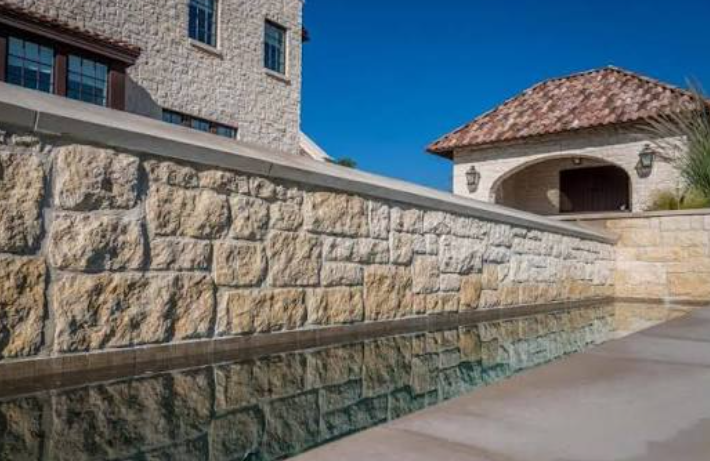
You can match the stone. You can match the coursing, and a pallet of pre cast stone pleasant view ut builders order will sit against a forty-year-old wall without anyone squinting at it. What you cannot fake is the joint. On a repair, the mortar is what gives the patch away, and that is the whole argument here: get the joint color right or the wall reads as a rectangle of new work from the street. Two of us patch chimney chases and entry columns around Ogden every spring, jobs that run 30 to 80 square feet, and the callback almost never has anything to do with the stone we picked.
Fresh Mortar Never Cures To The Color You Mixed
Wet mortar looks nothing like cured mortar. In the tub it reads dark and rich, close enough to the old joint that everybody signs off and the crew keeps laying. Three weeks later that same joint has dried two or three shades lighter, sometimes with a chalky film sitting on the face of it. Portland cement pulls free lime to the surface as the water leaves, and on a north-facing wall that never gets a full afternoon of sun, the bloom hangs around instead of weathering off. The color you approved was never the color you were going to end up with.
Here is the sequence we watch on a typical spring patch. The day the joint is struck, meaning tooled with an iron once the mortar has stiffened to about thumbprint firm, it looks perfect and the homeowner is thrilled. By week two the surface has given up its water and gone pale, and the patch quietly starts to outline itself against the old work. At month three, after a few freeze-thaw swings and a couple of hard rains, an untreated joint on a north chase sits at its lightest and the rectangle is readable from the sidewalk. That is usually when the phone rings, and by then the scaffold is long gone and the crew is on another street.
Dye Intensity Follows The Joint, Not The Stone
Mix to the old joint, not to the new stone. Job after job, the same mistake turns up: somebody holds a dyed sample against the fresh veneer, likes the contrast, and forgets there is already forty feet of weathered gray joint sitting six inches away. Harristone’s Lucky 7 line runs 21 colors at light, regular and dark intensity, each with its own stated ratio per bag of mortar, so the choice is not only which color. It is how hard you push that color once it is in the mix.
Example scenarios from spring patch jobs on Ogden-area chases, not measured results
| Joint Goal | Dye Intensity | How The Cured Joint Reads From The Curb |
| Blend into a weathered gray joint | Light | Flat and dusty, close to the old work within a season |
| Warm the joint toward the stone’s earth tones | Regular | Faint amber cast that ties the patch to the veneer |
| Drop the joint back so the stone reads first | Dark | Recedes into the shadow lines, stone edges look sharper |
The practical move is boring. Mix three small batches at three intensities, strike each one into a scrap board, and let them cure a full week before anyone picks a winner. (I have lost that argument in a driveway more than once, and then lost the patch along with it.) A week of curing costs less than pulling 40 square feet of perfectly good stone back off a wall because the joint went chalky on you.
Consistency between batches is the other half of the job. Dye scooped by eye into the first mixer and scooped by eye again after lunch gives you two different joints on one small patch, and at 30 square feet there is nowhere for that to hide. We weigh it, or we use the same marked cup every single time, and the ratio goes on the inside of the mixer lid in marker. Sand matters too, so the whole patch gets its sand from one pile in one trip.
Sealer Holds The Color Weather Would Bleach Out
Dye gets the color right on day one. Sealer is what keeps it there through year three. Ogden runs the full cycle in twelve months: a wet spring, dry summer heat, then freeze-thaw driving moisture in and out of the joint face all winter long. Every one of those swings carries a little more lime toward the surface and takes a little more pigment away from it. A professional-grade masonry sealer slows that exchange down, which is why a sealed test board and an unsealed one look like two separate mortars after two seasons outside. On a north-facing chase, that gap is the difference between a repair nobody notices and one that argues with you every time you pull into the driveway.
Coverage matters more than brand loyalty. Sealing only the new work leaves a sealed rectangle inside an unsealed wall, which is its own kind of visible once the light comes in low. We take the sealer out to the nearest natural break instead: an outside corner, a course line, the edge of a column. Let the change land where the eye already expects one.
See also: Payroll Services: Efficient Solutions for Business Success
Match The Joint Before You Order More Stone
Stone gets ordered first on most repairs, and that is backwards. Sort the joint before the pallet shows up, because the mortar decision constrains what the crew can do on the wall and it takes a full week to test honestly. The mix itself has moved on, too. Masonry Magazine reported in April 2026 that polymer-modified mortars for stone veneer bring enough added adhesive strength to accommodate units weighing up to 30 pounds per square foot, double the 15 pounds per square foot that prescriptive standards traditionally allowed. That opens the door to heavier profiles on a patch than plenty of crews assume they are allowed to hang.
So the order of operations is joint first, stone second. Photograph the existing joint in flat morning light rather than direct sun, cure your three test batches, pick the intensity that disappears instead of the one that looks best sitting in the tub, and only then order the pre cast stone pleasant view ut suppliers around Ogden keep in stock. Seal the finished work before the first hard freeze rather than waiting for spring. Do it in that order and three months out, the only person on the block who can still find your patch is you.
