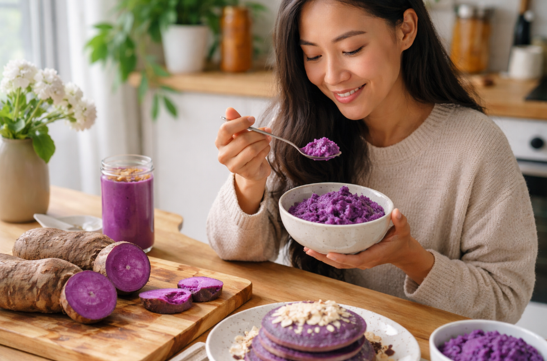
Some foods arrive quietly, then suddenly seem to be everywhere. Ube belongs to that category. Its violet flesh looks almost unreal, like a sunset folded into a root vegetable, though its story is old, grounded, and deeply tied to Asian food traditions, especially in the Philippines. People often notice the colour first, then ask the same questions: what is ube, does it offer real nutritional value, how does it differ from purple sweet potato, and is it worth adding to a regular routine? Those are sensible questions. Ube is not a miracle ingredient, though it is far more than a passing trend. It is a starchy tuber with an appealing flavour, a useful nutritional profile, and many practical uses in home cooking. Its value comes from the full picture: carbohydrates for energy, fibre for structure in meals, plant pigments that signal antioxidant activity, and a taste that feels both familiar and distinctive. For anyone trying to understand the real interest behind this purple staple, the most useful approach is a factual one. That means looking at what ube is, what it contains, what its colour suggests, how it fits into a balanced diet, and what expectations make sense.
What ube is and why its purple colour matters
Ube is a purple yam, usually identified botanically as Dioscorea alata. It is widely used across Asia and has a particularly strong culinary identity in Filipino cuisine, where it appears in desserts, breads, jams, cakes, drinks, and modern fusion recipes. In texture, it is dense and starchy. In flavour, it tends to be mildly sweet, earthy, creamy, and slightly nutty, which explains why it works in both comforting traditional recipes and newer products sold abroad. Anyone exploring ube in Canada is usually discovering more than a colourful ingredient. They are encountering a food with cultural roots, everyday uses, and nutritional qualities that deserve attention beyond aesthetics.
That colour is one of the main reasons ube stands out. A vivid violet shade in a plant food often points to the presence of natural pigments called anthocyanins. These compounds are found in several purple, blue, and red foods. Their presence does not turn a food into medicine, though it does make that food nutritionally interesting. Anthocyanins are studied for their antioxidant role, meaning they help neutralize oxidative stress generated during normal metabolic processes. Oxidative stress is not a dramatic event that can be felt from one day to the next. It is more like background wear on the body, comparable to rust forming slowly on exposed metal. Foods rich in colourful plant compounds can help support a dietary pattern that includes a broad range of protective nutrients.
Another important point is that ube is often confused with purple sweet potato, purple yam varieties from other regions, or taro coloured with flavouring. These foods may look similar in photos, though they are not nutritionally or botanically identical. Ube has its own taste, own texture, and own culinary behaviour. That distinction matters because many people search for the benefits of ube while actually seeing recipes or products made from another purple root. A clear understanding starts with naming the food correctly.
Its value also comes from how it is eaten. Whole or minimally processed ube offers a different nutritional experience than highly sweetened ube desserts, ice creams, frostings, or syrups. A root vegetable used in a meal brings fibre and structure. A dessert built around sugar and cream may still be enjoyable, though its nutritional profile shifts. For that reason, any realistic discussion of ube benefits should separate the tuber itself from the many indulgent products inspired by it. The root has qualities worth knowing. The dessert category is another story.
What nutrients does ube actually provide
When people ask whether ube is healthy, they are usually asking a few things at once. They want to know whether it contains valuable nutrients, whether it is better than ordinary starches, whether it can fit into balanced eating, and whether the excitement around it has any substance. The practical answer is yes, provided expectations stay grounded. Ube is primarily a carbohydrate-rich tuber, which means it functions as an energy food. That alone is not a weakness. Carbohydrates are a major energy source, especially in active lifestyles and balanced meals. What matters is the overall composition of the food and the context in which it is eaten.
Ube typically provides complex carbohydrates, some dietary fibre, and small to moderate amounts of naturally occurring micronutrients depending on the growing conditions, preparation, and serving size. Fibre matters because it helps shape the speed and feel of digestion. Meals that include fibre tend to be more satisfying than refined starches stripped of structure. A root vegetable like ube can therefore contribute to a meal that feels steadier and more complete, particularly when paired with protein, healthy fats, and other plant foods.
It may also contribute certain minerals and vitamins in modest amounts. Exact values vary, which is why precise numbers differ across food databases and cooking methods. Still, the broader point remains useful: ube is not nutritionally empty. It is a real whole food with enough substance to justify interest. People drawn to intensely coloured produce often assume the colour alone is the benefit. In truth, the appeal is more balanced than that. The colour signals plant compounds. The starch provides energy. The fibre adds structure. The overall food can support variety in the diet. Here are the nutritional features most often associated with ube:
- Carbohydrates
- Fibre
- Anthocyanins
- Potassium
- Vitamin C
- Plant compounds
That list should be read carefully. It does not mean every serving delivers these in remarkable amounts or that one plate changes health on its own. It means ube belongs to the category of colourful whole foods that can enrich a varied diet. Many readers also want to know whether ube is naturally sweet enough to replace added sugar. The answer is partial. Ube has a pleasant, mild sweetness, though not the intense sweetness people expect from processed desserts. In savoury or lightly sweet preparations, that natural taste can be an advantage because it allows the ingredient to carry flavour without needing so much added sugar.
Preparation has a major effect as well. Boiled, steamed, roasted, or mashed ube remains closer to its natural nutritional form. Once turned into sweet pastes, cakes, milk-based drinks, or heavily sweetened fillings, the profile changes. That distinction helps explain why some people report ube as a wholesome staple while others think of it only as a dessert flavour. Both impressions exist because ube lives in both worlds.
How ube may support a balanced eating pattern
The most honest way to discuss the benefits of ube is to place it inside a broader pattern of eating rather than isolate it as a star ingredient with exaggerated powers. Ube can support balanced eating in several practical ways. It can replace more refined starches in some meals, increase colour diversity on the plate, contribute fibre, and encourage home cooking because its flavour and appearance make simple recipes feel more inviting. That last point is often underestimated. Foods that make people want to cook real meals at home can have indirect benefits that matter just as much as nutrient counts.
One strength of ube is satiety potential when served in a simple form. A warm serving of mashed or roasted ube paired with legumes, fish, eggs, tofu, or poultry can feel substantial without relying on ultra-processed side dishes. That is useful for people trying to build meals that are satisfying and straightforward. The root’s density helps. It has the kind of texture that anchors a plate, almost like the foundation stones of a house. When meals feel grounded, people are often less tempted to chase snacks that leave them unsatisfied.
Ube and meal satisfaction
Meal satisfaction is not only about calories. It is about texture, volume, flavour, temperature, and how long a meal remains satisfying. Ube performs well on several of those points. Its texture is naturally creamy once cooked, though it still has body. That combination can make a meal feel comforting without becoming heavy in the way deep-fried or overly rich foods sometimes do. For readers who like practical nutrition, this matters because the best healthy food is often the food that people enjoy enough to eat regularly.
Pairing matters. Ube on its own is a starchy root. Ube with a protein source, vegetables, and some fat becomes part of a much more balanced plate. A person could build a lunch around grilled salmon, steamed greens, and mashed ube, or prepare a vegetarian bowl with lentils, mushrooms, cabbage, and roasted ube cubes. In both cases, the ube contributes energy and interest while the rest of the meal broadens the nutritional picture. This is the real value of a food like ube: not as a solo hero, though as one strong piece of a larger system.
It can also help diversify carbohydrate choices. Many people rotate through white rice, pasta, bread, and potatoes without much variation. Ube offers another option that feels different in taste and appearance. Dietary variety is useful because it tends to broaden the range of nutrients and plant compounds consumed over time. Even when the differences between foods are not dramatic in a single meal, the cumulative effect of varied eating patterns can be meaningful.
Ube in sweet dishes without losing perspective
People often discover ube through sweet foods. That is normal. Purple cakes, pastries, ice cream, pancake mixes, and latte-style drinks are visually striking and easy to market. There is nothing wrong with enjoying these foods. The issue is perspective. A dessert made with ube may still contain large amounts of sugar, cream, or refined flour. In that case, the dessert is still a dessert. The presence of ube does not cancel the rest of the formula.
That does not mean sweet uses have no place. It means the nutritional conversation should stay honest. A lightly sweetened ube porridge, baked oatmeal with ube purée, or homemade ube spread used in moderate amounts is not the same as a heavily frosted cake. Readers looking for sensible ways to enjoy purple yam nutrition should focus on recipes where the root remains central rather than decorative. When the ingredient itself leads the recipe, its flavour and texture come forward naturally.
From a practical Canadian perspective, that may mean using frozen grated ube, powdered ube in moderate amounts, or cooked whole ube when available from specialty grocers. The format matters less than the recipe pattern. Minimal processing and moderate sweetness usually preserve the most value.
See also: Businesses Using Edge Technology Successfully
Does ube have antioxidant benefits worth knowing about
The strongest nutrition-related interest around ube often centres on its antioxidant profile. That interest is understandable because the purple colour suggests the presence of anthocyanins and related plant compounds. Antioxidants are frequently discussed in exaggerated ways online, which creates confusion. A more accurate explanation is simpler. Antioxidant compounds in foods help support the body’s defence system against oxidative stress. They work as part of an overall diet. They do not act like a switch that turns health on overnight.
In whole foods, antioxidants arrive with fibre, carbohydrates, water, and other natural compounds. That combination is important. Nutrition rarely works well when broken into isolated promises. The body responds to patterns, mixtures, habits, and consistency. Ube can play a role in that pattern, especially for people trying to include more naturally colourful foods in daily meals. Purple, red, orange, and dark green produce often indicate different phytonutrients. Building a plate with a range of colours is a practical approach because colour often reflects chemical diversity.
There is also a behavioural advantage to colourful foods. People are drawn to them. That may sound superficial, though it has real impact. A food that makes someone more interested in cooking vegetables, roots, grains, and legumes has already improved the chances of better eating. Ube’s visual appeal may act like a doorway. Someone who would never get excited about another beige side dish may become curious about a purple mash, a roasted ube bowl, or a homemade breakfast made with ube. Curiosity is not a nutrient, though it can shape habits.
Readers should also know that antioxidant potential can be influenced by processing and cooking. Boiling, steaming, roasting, and mashing do not erase all value, though harsh processing, dilution in sugary products, or using only small flavouring amounts may reduce the meaningful presence of the root itself. That is one reason why labels and ingredients lists matter. A product named after ube may contain limited real ube. The colour may come from additives or only a small amount of powder. Anyone seeking genuine ube health benefits should pay attention to what is actually in the food.
Another useful point is moderation. People sometimes move from curiosity to overstatement very quickly. Ube can be part of a nutrient-conscious lifestyle, though it is still a starchy food. Portion size, preparation method, and meal balance all matter. The most helpful mindset is neither dismissive nor exaggerated. Ube is interesting because it combines enjoyment, culinary tradition, and nutritional value in one ingredient. That alone is enough to justify its growing popularity.
See also: Businesses Using Edge Technology Successfully
Ube versus purple sweet potato: why the difference matters
Search interest often mixes these two foods together, which creates a lot of confusion. Ube and purple sweet potato are not interchangeable from a botanical standpoint, and they do not always behave the same way in recipes. Their flavour, sweetness, starch structure, and texture can differ. That matters for readers who want accurate information rather than a colourful blur where every purple root is treated as identical.
Ube is generally richer, denser, and more dessert-friendly in its classic culinary identity, especially in Filipino preparations. Purple sweet potato can be drier or firmer depending on the variety. Nutritionally, both can be valuable whole foods, both can contain fibre, and both may contribute antioxidant pigments. Still, anyone specifically researching the benefits of ube should understand that the answer belongs to ube itself, not simply to any purple vegetable placed beside it on a screen.
This difference matters even more in packaged foods sold outside Asia. A bakery item called ube may use purple sweet potato. A frozen dessert may use flavouring and colour. A pancake mix may use powder without much real tuber. That does not make such products deceptive in every case, though it does mean consumers should read labels carefully. The real ingredient list tells the real story.
There is also a cultural point worth respecting. Ube is not only a nutrition object. It is a food with history, familiarity, and emotional value in many communities. Treating it only as a trend strips away part of what makes it meaningful. The same thing happens when traditional foods are rebranded as novelty items once they reach mainstream markets. Understanding ube properly means seeing both sides: the nutritional profile and the cultural lineage.
For home cooks in Canada, the best way to learn the difference is to cook with both ingredients. Roast them separately. Mash them. Taste them plain. Use them in a simple recipe without too much sugar. That direct experience teaches more than social media comparisons. Ube has a flavour identity that becomes clearer when it is not buried under frosting or syrups. For readers trying to make smarter food choices, sensory understanding is part of nutritional understanding. Knowing what a food truly tastes like helps people use it more intentionally.
Practical ways to eat ube at home
Interest is useful, though people eventually want concrete answers. How can ube be used in ordinary life without turning every recipe into a dessert? The good news is that ube is flexible. It can fit breakfast, snacks, side dishes, and even some savoury meals. The easiest starting point is a simple cooked preparation. Boiled or steamed ube can be mashed and served like potatoes. Roasted cubes can be added to bowls. Puréed ube can be blended into soups for colour and body. In breakfast dishes, it can be folded into oats, pancakes, or yogurt bowls, especially when sweetness is kept moderate.
Simple savoury ideas
A practical savoury use is to roast ube with a little oil and salt until the edges caramelize lightly. Served with greens and a protein source, it gives a plate colour and substance without much effort. Another option is a mixed root mash using ube with cauliflower or regular potato for a softer introduction to its flavour. Soups also work well because ube adds a velvety texture and a striking appearance. A bowl of purple soup may look playful, though the appeal is not only visual. When people enjoy the look of their meals, they often become more engaged in preparing them.
Ube can also replace some of the starch in grain bowls. A meal built around brown rice or quinoa can include roasted ube pieces for contrast. That combination works well with sesame, ginger, miso, scallions, or coconut-based seasonings. None of these ideas require elaborate pastry skills. They are ordinary kitchen uses, which makes ube more accessible to people who do not bake.
The key is restraint with added sugar when the goal is nutrition. Sweet recipes are enjoyable, though savoury or lightly sweet approaches usually reveal the ingredient more clearly. They also make it easier to appreciate ube as a food rather than a novelty colour.
Balanced sweet uses
For sweet applications, homemade recipes give more control. Ube can be blended into overnight oats, baked into muffins with less sugar than commercial pastries, or stirred into porridge with cinnamon and plain yogurt. It can also be used in a lightly sweetened spread or in baked custard-style dishes where the root provides both flavour and body. Those options allow people to enjoy the ingredient without drowning it in sugar.
A useful rule is to ask whether the recipe still makes sense if the bright purple colour is ignored. If the answer is yes, the recipe probably respects the ingredient. If the only attraction is appearance, the result may be more trend than substance. Ube deserves better than that because its taste is gentle, comforting, and distinct enough to stand on its own.
Availability in Canada continues to improve, especially in Asian grocery stores and specialty food shops. Frozen grated ube is often one of the most convenient forms for home use. Powders and extracts are common too, though their quality varies. Whole fresh ube may be harder to find depending on the region. When choosing products, looking for real ube in the ingredient list is usually the best starting point.
Why ube deserves attention without being exaggerated
Ube is worth knowing because it offers something rare in food culture today: real visual appeal backed by genuine substance. It is attractive, though not empty. It is traditional, though adaptable. It is pleasant to eat, though still nutritious when used thoughtfully. Those qualities explain why so many people are searching for it. The smartest way to understand ube is to keep both feet on the ground. It is not a cure, not a magic shortcut, not a decorative ingredient that automatically upgrades every dessert into health food. It is a colourful root vegetable with fibre, plant compounds, culinary flexibility, and the ability to make balanced meals more interesting.
For readers trying to eat with more variety, ube can be a useful addition. It introduces a different flavour profile, a different colour family, and a different cultural food tradition into the kitchen. That matters because nutrition is not only biochemistry. It is also habit, pleasure, memory, access, and curiosity. Foods that people enjoy tend to stay in rotation. Foods that stay in rotation can shape long-term patterns more effectively than perfect foods no one actually cooks.
Ube stands out for good reasons. Its purple flesh signals valuable plant compounds, its texture makes meals satisfying, and its flavour gives cooks something distinct to work with. Used in a balanced way, it can earn a real place on the plate rather than live only as a trend online. Have you tasted ube in its simplest form yet, or are you still meeting it through desserts first?