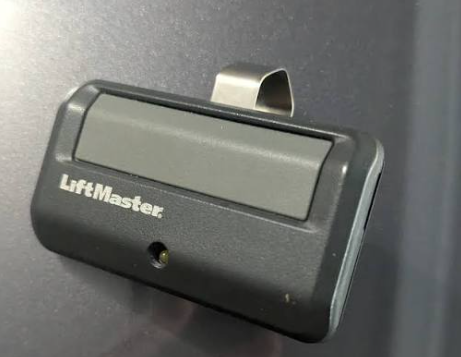
Horsepower is the least useful number on the box. Hosts running summer turnovers around Newport shop liftmaster garage door openers newport ri listings by motor size and quiet operation, when the thing that actually strands a guest in the driveway at nine at night is how a person holding no remote gets the door open. So here is the argument, stated plainly: an opener on a rental property should be specified around access and outage behavior, not lifting muscle. Half horsepower and a full horsepower both raise the same residential door. Only one setup lets a cleaner in while you are an hour away in traffic.
Guest Access Fails At The Opener Not The Lock
Most hosts solved the front door years ago with a smart lock and a code that rotates between stays. The garage is where it falls apart. The case we see most often is a house near Newport with a spotless keyless entry at the front and a 1990s opener in the garage whose only credential is one visor remote that has been handed to strangers all summer. Guests park, find the door shut, and start texting. That is twenty minutes gone from a changeover window that was only twenty minutes long to begin with.
The lock industry moved quickly and the opener industry did not, so two halves of the same house now run on different decades. An opener on a rental is an access device first and a motor second. Treat it that way and most of the spec sheet sorts itself out.
See also; The August Power Bill That Doubled Without Extra Cooling
Mistake One Is Shopping On Horsepower Alone
Half horse, three quarter, one full: the difference matters on a wide, heavy, insulated double door and almost nowhere else. A standard sixteen by seven sectional door is counterweighted by its springs, so the motor is nudging a balanced load rather than hauling three hundred pounds off the floor. Job after job, an opener that struggles turns out to be a spring problem or a bent track problem, and dropping in a bigger motor just burns out a bigger motor. What earns its money on a rental is the rest of the list: keypad support, a battery, and a way to grant and revoke entry without meeting anyone at the curb.
Drive type is worth an argument, though. A belt drive under a bedroom is the difference between a guest sleeping through a six in the morning departure and a guest writing about it. Chain drives cost less and make more noise, and on a detached garage nobody notices either way.
Rolling Codes And Keypads Solve Different Problems
Sales copy bundles these two together and they answer completely different questions. Rolling code is about the signal. In a March 2026 technical explainer, the team at Overhead Garage Door laid out how a rolling code opener generates a new encrypted access code with every use, preventing replay attacks where someone parked at the curb records a remote and plays it back an hour later. A fixed-code remote from 1998 sends the same number forever. If that is what is bolted to your ceiling, no app is going to fix it.
A keypad is about the credential. It is the part that lets you give a cleaner four digits on a Tuesday and delete them on Wednesday, and anyone comparing LiftMaster garage door openers Newport RI installers actually stock should confirm whether the keypad ships with the unit, because on plenty of models it is a separate accessory. Wireless keypads pair to the motor head the same way a remote does. Hardwired ones land on what installers call a dry contact, meaning a low-voltage terminal on the motor head that any button or panel can be wired into, which starts to matter on a detached garage where the signal has to cross a driveway and two exterior walls.
The mistake is buying one and assuming you bought the other. A brand-new smart opener with app control and no keypad still fails the guest who arrives with a dead phone and no Wi-Fi credential, which happens more than you would think in a house where the last guest unplugged the router. It fails the other direction too, because an old opener with a keypad screwed to the jamb is still broadcasting the same fixed code to anyone with a scanner. On a three-property setup we usually find one standard everywhere beats mixing brands, so a code that works at one house works the same way at the next and nobody has to remember which door is the strange one.
An Outage Ends A Turnover In Minutes
Peak season on the coast brings wind, and wind brings power cuts. An opener with no battery is a dead opener, and the workaround is the emergency release cord, which a guest will absolutely yank in the dark. Never pull that release while the door is open, because the door can drop under its own weight once the trolley disconnects from the carriage. Pull it with the door down, lift by hand, and reconnect it before you leave.
Battery backup is not a luxury on a rental property. It is the difference between a text message and a refund.
Smart Openers Still Need An Access Routine
A Wi-Fi opener does not manage itself. Every remote eventually walks off with a guest, and every app invite you send stays live until somebody revokes it, so the routine has to be written down somewhere: rotate the keypad code on changeover day, remove the departing guest from the app before the cleaner arrives, and read the activity log once a week to see who actually opened what. Notifications are the setting hosts switch off first and regret later. Across three properties in July that is maybe ten minutes of admin a week, which is cheaper than one stranded arrival.
Spec The Opener Around The Turnover
Start from the twenty-minute window and work backward to the hardware. A guest arriving with no remote needs a keypad, a cleaner arriving midweek needs a credential you can hand over and take back, a Saturday storm needs a battery, and the signal itself needs to be rolling rather than a number frozen in 1998. Horsepower is the last question on the list, and on most residential doors it is barely a question at all. Get the access story right and the opener quietly stops being the reason your phone lights up at nine at night.
