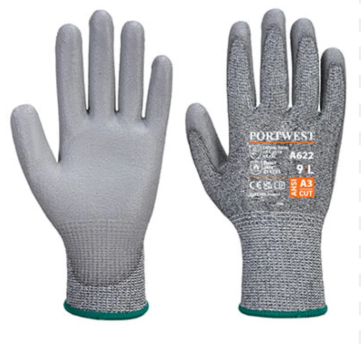
When workers need maximum hand protection without sacrificing the dexterity to perform detailed tasks, polyurethane palm coated gloves deliver an outstanding solution. By restricting the coating to the palm and fingers while leaving the back of the hand uncoated, these gloves achieve the best of both worlds: reliable grip and protection where it matters most, combined with breathability and flexibility.
The Advantage of Palm-Only Coating
Enhanced Breathability
Full-hand coated gloves, while comprehensive in protection, can trap heat and moisture, leading to discomfort during extended wear. Palm-coated designs address this by allowing the back of the hand to breathe freely through the knit liner material.
For workers in warm environments or those performing physically demanding tasks, this breathability is not just a comfort feature — it’s a health consideration. Excessive sweating under gloves can cause skin irritation and, in severe cases, contact dermatitis. Palm-coated gloves significantly reduce this risk.
Applications Where Palm Coating Excels
Polyurethane palm coated gloves are particularly well-suited for warehousing and distribution, electronics assembly, automotive parts handling, quality inspection, and general manufacturing. In each of these settings, workers interact primarily with objects through the palm and fingers, making full-hand coating unnecessary.
For tasks involving overhead work or carrying objects with the back of the hand exposed to surfaces, operators should consider whether additional dorsal protection is needed. In many cases, the knit liner itself provides sufficient protection for minor contact hazards.
Choosing the Right Palm Coverage Area
‘Palm coated’ is not a uniform specification — different gloves coat different areas. Some extend coating well into the finger crotches and over the fingertips; others stop at the first knuckle. Understanding the exact coverage area matters when evaluating protection for specific grip styles.
For tasks involving pinching small parts, full fingertip coverage is essential. For grip-intensive tasks like carrying boxes or operating power tools, coverage across the full palm and at least the first half of each finger is necessary to prevent slippage.
Frequently Asked Questions
Q: Are polyurethane palm coated gloves suitable for cut-hazard environments?
A: Standard PU palm coated gloves offer minimal cut resistance. For environments with cut hazards, selecting a glove with an HPPE or stainless steel fiber liner significantly improves protection.
Q: How do palm coated gloves compare to full-coat options in terms of durability?
A: Full-coat gloves tend to be slightly more durable because the coating protects the liner from abrasion across a larger area. However, palm-coated gloves can be more comfortable and are adequate for most light to moderate applications.
Q: What sizes are typically available for palm coated gloves?
A: Most manufacturers offer sizes from small through XXL. Custom sizing is available from specialist manufacturers for applications where standard sizes don’t provide an optimal fit.
Conclusion
Polyurethane palm coated gloves represent a thoughtful engineering compromise that serves the practical needs of many workers in modern industrial and logistics settings. By understanding the coating coverage, liner material, and appropriate application range, safety managers can select gloves that optimize both protection and comfort.
